

By Connor Jorgensen, Director of Business Development, TUSK Practice Sales
Picture the day you hand over the keys. The day you walk out of your operatory for the last time as the owner. Now count backward. If that day is five years away, the decisions shaping your exit are the ones you are making right now.
For owners considering dental practice exit planning in New York and Western Pennsylvania, five years can provide valuable time to strengthen financial performance, prepare the team, and choose the right ownership transition. Whether your practice is in Buffalo, Rochester, Syracuse, Pittsburgh, Erie, or another community across the region, your personal retirement timeline should guide your planning.
When a dentist tells me they are about five years out, they often mean they will start thinking about a transition in four years and sell in five. That approach can leave too little time. By the time you decide to go to market, the financial results from the previous two or three years are already helping shape the offers you receive.
If you are asking, “When should I sell my dental practice in New York?” or considering the same question in Western Pennsylvania, start with the date you want to finish practicing, then work backward. Selling the business and retiring from clinical dentistry may happen on different dates.
Your Retirement Timeline Matters as Much as Your Practice’s Performance
Before discussing buyers or valuation, consider your own goals. When do you actually want to step back from the chair? Do you want a gradual reduction in clinical hours, an associate to assume more responsibility, or a defined retirement date?
If your plan is to reduce your production and improve your work-life balance, that change needs careful timing. You may need to continue practicing throughout the sale process and after closing, depending on the buyer and the terms you negotiate.
A sale to a dental support organization, or DSO, may include a multiyear employment commitment. In some transactions, that commitment can run three to five years. A traditional doctor-to-doctor sale may allow a shorter handoff, but the transition period depends on the practice, the buyer’s needs, and the purchase agreement.
Buyers also continue reviewing performance during due diligence after a letter of intent, or LOI, is signed. If collections, production, or profitability weaken while you are negotiating, the buyer may revisit the valuation or transaction terms.
That is why an experienced dental practice broker should help you align your clinical plans with the sale process. Reducing your schedule before you have a continuity plan can affect both buyer confidence and the income supporting your valuation.
How to Sell My Dental Practice: Start With Financial Preparation
A successful transition begins well before a listing goes live. Dental practice exit planning in New York should include a review of the financial records, operational trends, and ownership goals that will shape the sale. The same preparation matters for owners selling a dental practice in Western Pennsylvania.
Buyers evaluate more than annual revenue. Depending on the transaction, they may review profitability, earnings before interest, taxes, depreciation, and amortization (EBITDA), provider production, hygiene performance, patient activity, payer mix, staffing, and location.
Working with an advisor before going to market can help identify questions that might otherwise surface late in due diligence. Useful preparation includes:
- Organized financial statements and tax returns that can be reconciled to practice reports.
- Documented adjustments, or add-backs, with clear support for why they are appropriate.
- Production and collections reports by provider.
- Hygiene production, recall activity, and patient retention information.
- Staffing details, compensation records, and a plan for continuity after the sale.
- Lease information and clarity about whether real estate is included, available separately, or retained by the seller.
These records help a buyer understand how the practice operates and whether its earnings are sustainable. They also give you time to address weaknesses before those weaknesses become negotiating points.
For a dentist thinking, “I want to sell my dental practice, but I am not ready yet,” preparation is still a productive first step. You can establish a baseline valuation and identify improvements without immediately committing to a sale.
What Buyers Look for in New York and Western Pennsylvania
Dentists comparing dental practices for sale in New York want to understand both the opportunity and the responsibilities of ownership. A buyer evaluating a dental practice for sale in New York will look closely at the consistency of collections, the stability of the team, and the ability to retain patients after the seller leaves.
Those same considerations apply to dental practices for sale in Western Pennsylvania. A practice in Pittsburgh may present different location and staffing considerations from one in Erie or a smaller surrounding community. Your marketing materials should explain the practice’s specific strengths rather than rely on broad regional claims.
Someone planning to buy a dental practice in New York needs a credible picture of what the business will look like after closing. If most production depends on the seller, buyers will want to understand how that work will transfer and whether additional clinical support is needed.
Buyers browsing dental offices for sale in New York may also compare lease terms, equipment, operatories, and space for future growth. A dental office for sale in New York with clear occupancy arrangements can be easier to evaluate than one with unresolved lease questions. Similar preparation benefits sellers in Western Pennsylvania.
Whether buyers search for dental clinics for sale in New York or a dental clinic for sale in Western Pennsylvania, the underlying concern is the same: can this practice support a stable and successful ownership transition?
Understand the Time Between Going to Market and Retiring
Preparing a practice for market takes time. Your advisor needs to organize the financial information, develop marketing materials, and anticipate questions buyers may raise. Once the practice goes to market, you need time to evaluate buyers and consider both financial and cultural alignment.
After selecting a buyer, the transaction moves into due diligence. Depending on the deal, this can include financial verification, financing, legal review, lease arrangements, and transition planning. A DSO buyer may also use a quality of earnings review to assess the practice’s reported profitability.
Some DSO transactions take approximately six to nine months from preparation to closing, although the actual schedule can be shorter or longer. That period is separate from any employment commitment that begins after closing.
A private buyer transaction follows a different structure, but it still requires meaningful due diligence. A smaller purchase price does not remove the need to verify financial performance, financing, occupancy arrangements, and other essential terms.
When comparing dental practice brokers, ask how each advisor approaches buyer selection, preparation, confidentiality, and the likely transition schedule for your practice. A dental broker should help you understand how the proposed deal fits your life after the sale.
Work Backward From the Date You Want to Be Finished
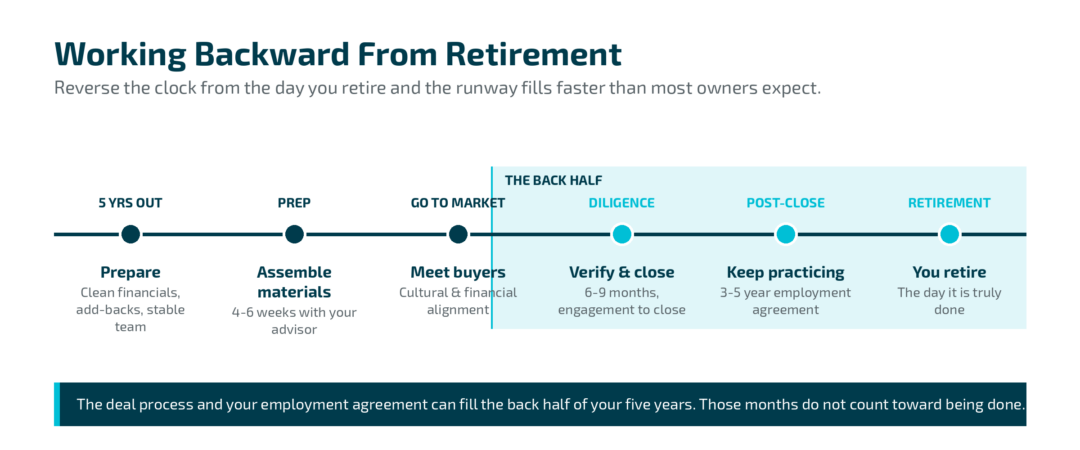
If you want to be fully retired in five years and are considering a DSO transaction with a substantial employment commitment, you may need to explore your options now. The sale process and post-closing obligations could use much of that window.
If you prefer a doctor-to-doctor sale, your timeline may be different. Even so, early planning gives you more flexibility to strengthen performance, prepare an associate, resolve lease questions, and find a buyer whose goals align with yours.
If retirement is six or more years away, now is an opportunity to understand your practice’s value, stabilize your team, and address operational issues while you have time to make deliberate changes.
For owners preparing to sell a dental practice in New York or Western Pennsylvania, the goal is to preserve choices. Burnout, a health event, staff turnover, or declining margins can create pressure to sell before the practice is ready. Preparation helps reduce that pressure.
Ask Yourself What You Need From a Dental Practice Sale
Before choosing a transaction path, take an honest look at these questions:
- When do I want to stop practicing, rather than simply stop owning the business?
- What do I need from a sale financially, professionally, and personally?
- How long am I willing to work after closing?
- Can I maintain the practice’s performance while preparing for a transition?
- Would an associate or additional support help reduce the practice’s dependence on me?
- Are my financial records, lease arrangements, and staffing plans ready for buyer review?
A dental practice valuation and a candid discussion about your timeline can help establish where you stand today. You do not have to be ready to sell your dental practice to start getting ready.
Plan Your Dental Practice Transition in New York and Western Pennsylvania
If you are wondering how to sell your dental practice in New York or Western Pennsylvania, start by understanding your options and the preparation each path requires. Early planning can help you protect practice value, evaluate potential buyers, and coordinate the sale with your retirement goals.
Whether you are preparing a dental clinic for sale in New York or planning a future transition in Western Pennsylvania, a conversation with Justin Baumann at DDSmatch can help you identify your next steps.